FIELD NOTES / THE PELICAN TEST
Why AI models draw
pelicans on bicycles.
One bird, two wheels, and quite a lot of room for interpretation.
In October 2024, Simon Willison began asking language models for the same drawing. He chose a pelican because he likes them, and suspected the unusual combination would be scarce in training data. The result became his informal pelican test.
The model writes SVG: text instructions for shapes, paths and colors that a browser turns into an image. Getting the bird, bicycle and act of riding to fit together is where things get interesting.
LOOK CLOSELY
A drawing test.
A very specific one.
Follow the bicycle frame from wheel to wheel. Find the pedals, then the feet. Look at how the beak joins the head. Those small decisions make each drawing its own peculiar answer to the same request.
A single picture cannot rank a model’s general intelligence. These are selected outputs, not repeated trials under a controlled evaluation. Willison has also discussed what training specifically for this test would mean, including checking other animals and vehicles.
THREE MODELS / TWELVE OUTPUTS
Same brief.
Different birds.
These are the original scenes used for our tee choices. Each caption identifies the model and recorded thinking setting; each source link opens the published transcript. “High” is a setting within a model, not a shared scale across models.

DRAWING 1 / 12
GPT-6 Astra
Thinking setting: high

DRAWING 2 / 12
GPT-6 Astra
Thinking setting: low

DRAWING 3 / 12
GPT-6 Astra
Thinking setting: medium

DRAWING 4 / 12
GPT-6 Astra
Thinking setting: xhigh

DRAWING 5 / 12
GPT-6 Astra
Thinking setting: max
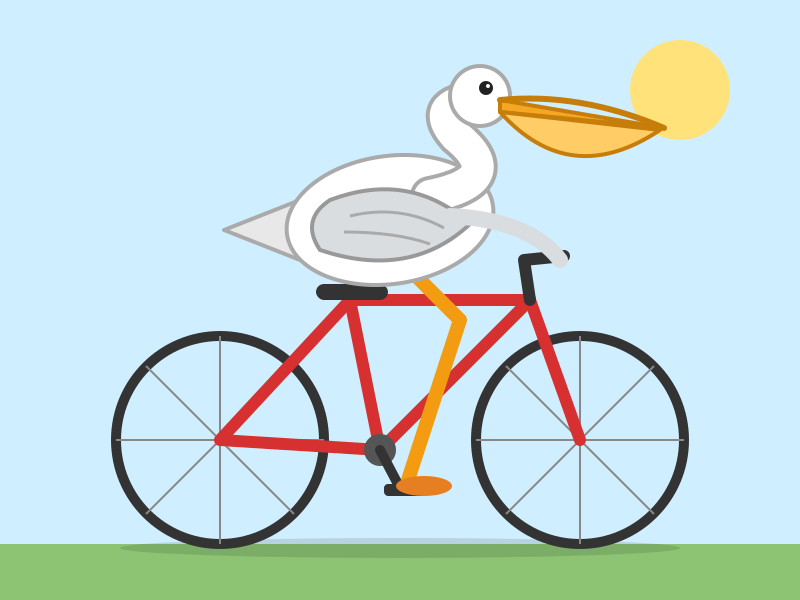
DRAWING 6 / 12
Claude Sonnet 5.5
Thinking setting: high
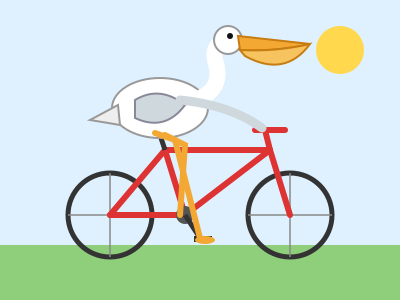
DRAWING 7 / 12
Claude Sonnet 5.5
Thinking setting: low
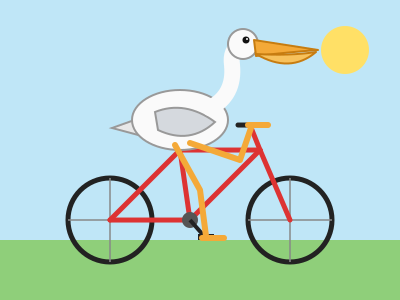
DRAWING 8 / 12
Claude Sonnet 5.5
Thinking setting: medium

DRAWING 9 / 12
Claude Sonnet 5.5
Thinking setting: xhigh

DRAWING 10 / 12
Gemini 3.8 Flash
Thinking setting: high

DRAWING 11 / 12
Gemini 3.8 Flash
Thinking setting: low

DRAWING 12 / 12
Gemini 3.8 Flash
Thinking setting: medium
The selection includes five GPT-6 Astra settings, four Claude Sonnet 5.5 settings and three Gemini 3.8 Flash settings. Sonnet’s max transcript produced no SVG, so it has no drawing here.
Where the artwork comes from
The drawings are raw SVG responses published in Simon Willison’s model transcripts. The gallery preserves their drawing content, with code comments removed. PDOOMERS selected and adapted those outputs for the tee preview.
What you can change
Keep the original scene or choose our edited version with the background removed. Add an optional model-and-thinking signature. The gallery’s tee links start with the background removed and no signature; both options can be changed in the picker.
Model names identify the source of the drawing. This is independent merchandise, with no affiliation or endorsement from Simon Willison or the model providers.